Market Leader: A Strategic Approach to Typography for Modern Brand Identity
In the landscape of visual communication, typography is rarely just about readability; it is a primary vehicle for brand personality and market positioning. When selecting a typeface for high-impact applications, designers and business owners often seek a balance between authority and contemporary appeal. Market Leader emerges as a sophisticated choice in this arena, offering a display font that bridges the gap between corporate professionalism and modern creative flair. This article explores the strategic utility of Market Leader, examining how its design characteristics can support branding goals, enhance customer experience, and contribute to long-term business results.
Understanding the Design DNA of Market Leader
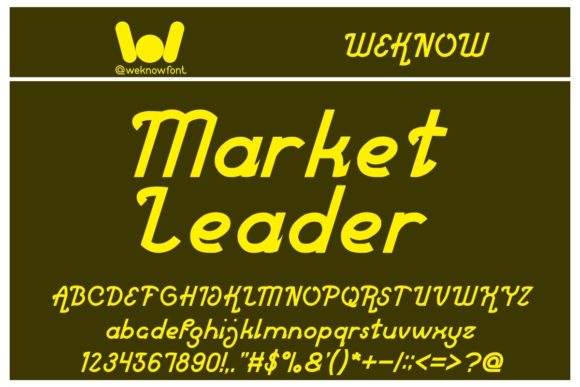
To make informed decisions about font usage, one must first understand the structural intent behind the typeface. Market Leader is categorized as a fancy and modern display font. Unlike serif or sans-serif body text fonts designed for prolonged reading, display fonts are engineered for impact at larger sizes. The "fancy" descriptor here does not imply ornamentation for its own sake, but rather suggests a refined aesthetic with distinctive character—likely featuring sharp angles, unique ligatures, or a bold geometric structure that commands attention.
This design philosophy makes Market Leader particularly suitable for contexts where immediate recognition is paramount. It is not intended for dense paragraphs of text but serves as a powerful tool for:
- Logo Design: Creating a memorable visual anchor for a brand.
- Logotypes: Establishing a typographic identity that stands alone without accompanying icons.
- Headlines: Capturing user attention in digital and print media.
- Corporate Identity: Reinforcing professional values through consistent visual language.
By understanding that Market Leader is a display font, practitioners can avoid common pitfalls such as overuse in body copy or poor scalability on low-resolution screens. Its strength lies in its ability to convey confidence and clarity in short bursts of information.
Strategic Applications Across Industries
The versatility of Market Leader allows it to adapt to various sectors, provided the application aligns with the brand’s core message. For entrepreneurs and small business owners, the font offers a way to project stability and leadership without appearing outdated. In the apparel industry, for instance, using Market Leader for taglines or collection names can elevate perceived value, suggesting a premium product line.
Similarly, in the creative industries—including music, movies, games, and publishing—the font’s modern edge supports innovative storytelling. A comic book publisher might use Market Leader for issue titles to create a sense of urgency and excitement, while a magazine editor might employ it for feature headlines to signal depth and seriousness. The key is intentionality: the font should amplify the content, not distract from it.
Digital Presence and Social Media
In an era dominated by digital engagement, visual hierarchy is critical. On platforms like YouTube and Instagram, where thumbnails and post graphics compete for attention in milliseconds, Market Leader can serve as a decisive element. Its bold presence ensures that text remains legible even when scaled down or overlaid on complex backgrounds. For bloggers and content creators, using Market Leader for featured titles can improve click-through rates by making content appear more polished and authoritative.
However, digital implementation requires technical consideration. Designers must ensure that the font renders correctly across devices and browsers. Using web-safe alternatives or optimizing font files for faster loading times is essential to maintain a seamless user experience. A slow-loading website due to heavy font files can negate the benefits of an attractive typeface, highlighting the importance of balancing aesthetics with performance.
Planning for Long-Term Brand Consistency
One of the most significant advantages of adopting Market Leader is its potential to strengthen corporate and brand identity. Consistency in visual elements builds trust with audiences over time. When a business uses Market Leader across its website, marketing materials, and packaging, it creates a cohesive narrative that reinforces brand recall.
For decision-makers, integrating a specific typeface into the brand guidelines involves more than just choosing a font file. It requires establishing rules for usage, such as minimum sizing, color contrasts, and spacing (kerning and leading). These guidelines ensure that Market Leader is used effectively, maintaining its integrity regardless of who executes the design.
- Define Primary Use Cases: Clearly outline where Market Leader will be used (e.g., headers only) versus where other fonts will take precedence (e.g., body text).
- Establish Contrast Pairs: Pair Market Leader with a neutral, highly readable sans-serif or serif font for supporting text to create visual balance.
- Test Scalability: Verify that the font maintains its legibility and aesthetic appeal at various sizes, from large billboards to mobile app icons.
Risks and Considerations in Font Selection
While Market Leader offers many benefits, relying on it without clear goals can lead to suboptimal results. A common mistake is using display fonts for extensive text blocks, which can cause reader fatigue and reduce comprehension. Additionally, the "fancy" nature of the font may clash with brands aiming for a minimalist or understated aesthetic. It is crucial to assess whether the tone of Market Leader aligns with the brand’s voice.
Another risk is the potential for trendiness. Display fonts often reflect current design trends, which can date quickly. Businesses investing heavily in rebranding with a trendy font may find themselves needing another overhaul sooner than anticipated. To mitigate this, consider pairing Market Leader with timeless design elements that remain relevant across changing trends.
Licensing is also a critical factor. Ensure that the license for Market Leader covers all intended uses, including commercial projects, merchandise, and digital distribution. Failure to secure proper licensing can result in legal issues and financial penalties, undermining the very brand reputation the font is meant to build.
Enhancing Customer Experience Through Typography
Typography plays a subtle yet profound role in customer experience (CX). Well-chosen fonts guide the eye, establish hierarchy, and evoke emotional responses. Market Leader, with its strong presence, can help create a sense of reliability and expertise, which is particularly valuable in competitive markets. When customers encounter a brand that presents itself clearly and professionally, their perception of quality increases.
For educators and professionals, using Market Leader in presentations or educational materials can emphasize key concepts and improve information retention. The distinctiveness of the font helps differentiate important points from supporting details, aiding in cognitive processing. However, accessibility must remain a priority. Ensuring sufficient contrast and avoiding overly decorative variations that hinder readability is essential for inclusive design.
Intentional Design for Better Results
The ultimate goal of using Market Leader should be to support strategic objectives, whether those are increasing brand awareness, driving sales, or enhancing user engagement. Intentional design involves asking questions before applying the font: What message do we want to convey? Who is our audience? How does this font align with our brand values?
By approaching Market Leader as a strategic asset rather than a decorative afterthought, designers and business owners can achieve better outcomes. This mindset encourages thoughtful planning, rigorous testing, and continuous refinement. It transforms typography from a mere aesthetic choice into a functional component of business strategy.
In conclusion, Market Leader is a versatile and impactful display font suitable for a wide range of creative projects. Its modern and sophisticated design makes it ideal for logos, headlines, and branding materials across various industries. By understanding its strengths, limitations, and appropriate use cases, practitioners can leverage Market Leader to enhance their visual communication, strengthen their brand identity, and achieve their long-term goals. Whether you are a freelancer, a corporation, or a hobbyist, incorporating Market Leader into your toolkit with intention can lead to more effective and compelling design outcomes.